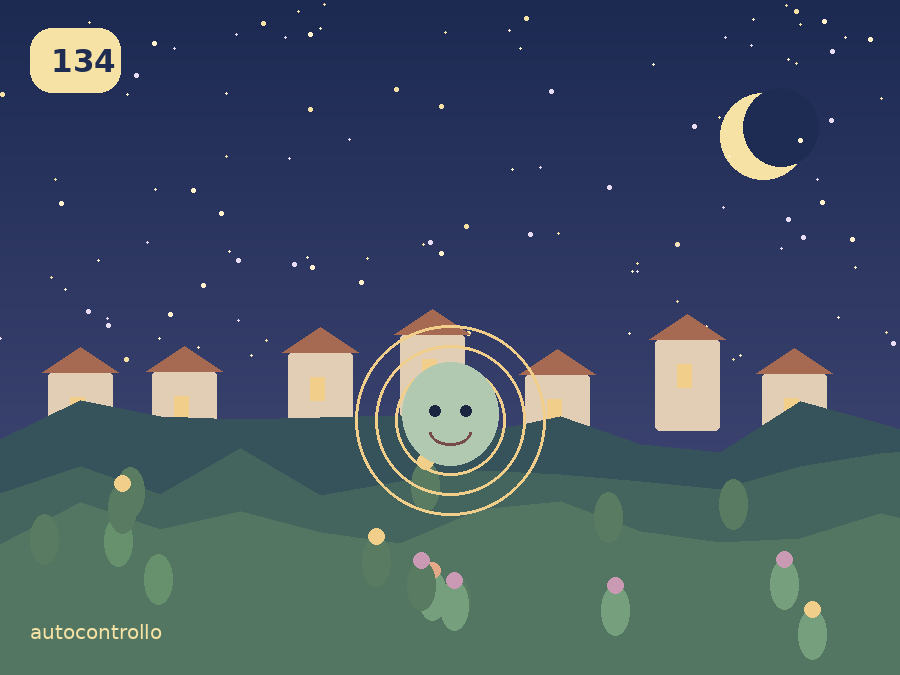
Cicì the cicada loved making noise.
All day she sang from the fig tree, from the wall, from the dry grass near the masseria. She sang when the sun was high, when goats passed, when children laughed, and even when no one was listening.
“I have a strong voice,” she said.
The other insects agreed, but sometimes they were tired.
One evening, Cicì heard a sound she did not know. It was thin, green, almost transparent.
Tin.
She stopped singing.
Tin.
The sound came from a blade of grass.
“What instrument are you?” asked Cicì.
“I play only when everything is quiet,” said the grass.
“Then you must play very rarely.”
“Because many creatures are afraid of silence.”
Cicì wanted to hear more, but as soon as she asked loudly, the blade of grass stopped. She tried again, whispering. The grass gave one note. Then another. Around them the meadow became full of little sounds: an ant moving a seed, a lizard breathing, the far bell of a sheep, the soft wing of a moth.
Cicì was amazed.
“I thought music was what I made.”
“Music is also what you allow to be heard,” said the grass.
The next day Cicì still sang. She was a cicada, after all. But she left spaces in her song. In those spaces, the meadow answered.
Children passing by noticed the difference.
“It sounds sweeter,” one said.
Cicì smiled. Her voice had not become weaker. It had become more respectful.
At sunset she sat near the blade of grass and listened to the tiny green music.
And she understood that silence is not the end of song. It is the place where many hidden songs begin.