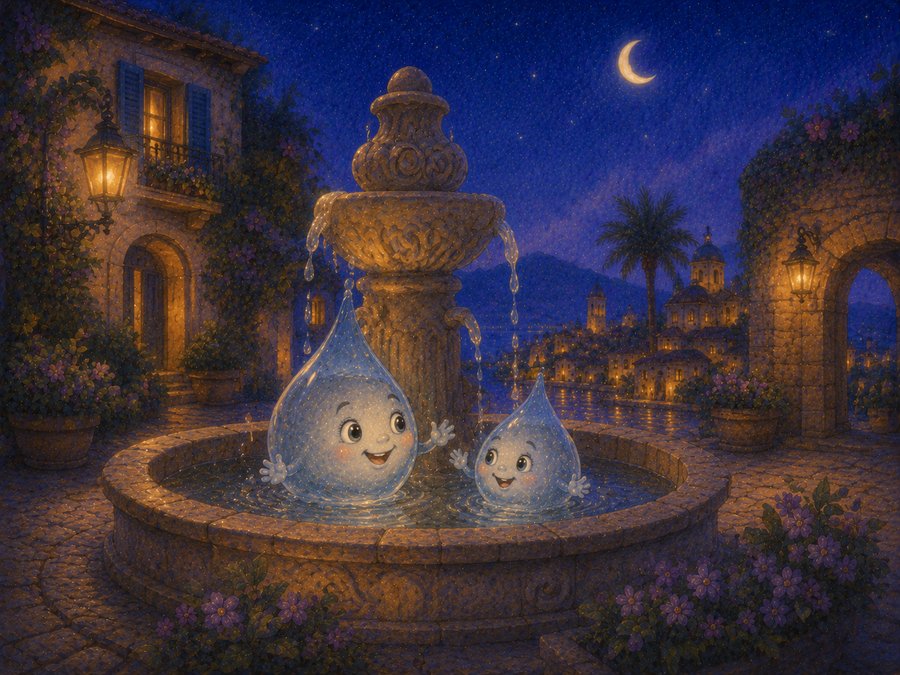
In the middle of the square there was an old fountain with four stone mouths.
Every afternoon the children came to drink after running. They pressed their hands under the water, splashed their faces, and laughed.
One day they began to argue.
“I want more,” said Paolo.
“You drank first,” said Sara.
“My cup is bigger,” said Amir.
The fountain listened and became quiet. Only one drop fell.
Plin.
“Why have you stopped?” asked Sara.
“Because you are asking me to be fair, but you have not yet understood what fair means.”
The children looked at one another.
“Fair means equal,” said Paolo.
The fountain filled four cups with exactly the same amount of water. Paolo’s large cup looked almost empty. Sara’s small cup overflowed. Amir, who was not very thirsty, left half of his.
The children were confused.
Then the fountain tried again.
It gave Paolo enough to drink after his long run. It gave Sara a smaller amount, because her cup was small. It gave Amir only a little, because he wanted to wet his lips. It left water for the dog waiting under the bench.
“That is not the same,” said Sara.
“No,” replied the fountain. “It is attentive.”
A little girl arrived with a wilting flower in a pot. The fountain saved a thin stream for the soil.
The children watched the leaves rise again.
From that day they played the fountain game. Before sharing, they asked: Who is thirsty? Who has a small cup? Who needs only a little? Who has not spoken yet?
The square did not become perfect. Children still argued sometimes. But when the fountain went plin, they remembered to listen.
And the water, divided with care, seemed sweeter.