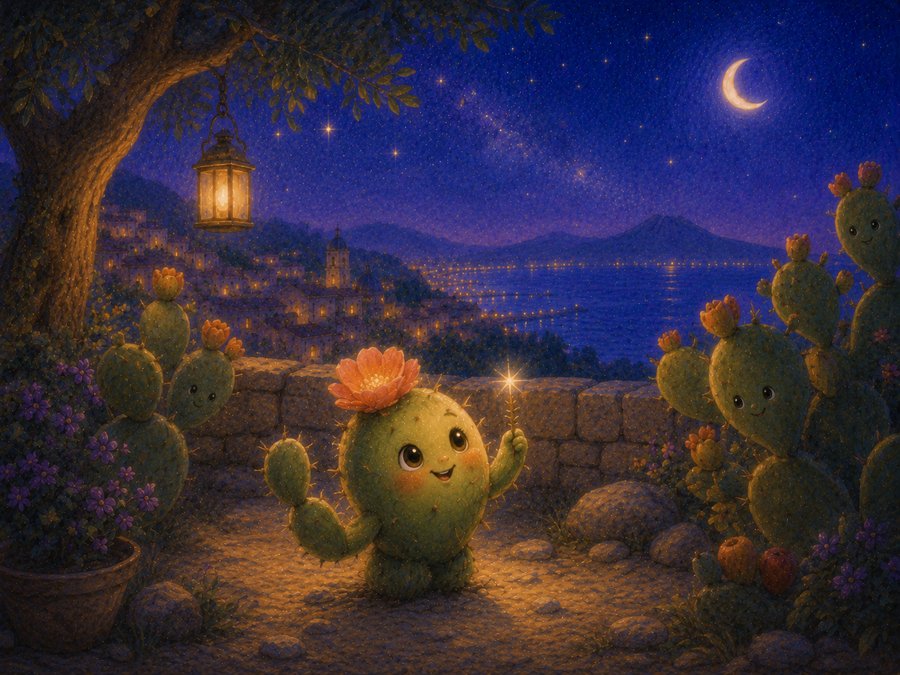
Beside the dry-stone wall, where the lizards warmed themselves in the morning, there grew a prickly pear.
It had broad green pads, yellow flowers, and little fruits that the sun slowly coloured. Everyone in the garden asked it for something.
“Give me a flower,” said the bee.
“Give me shade,” said the snail.
“Give me a fruit,” said the blackbird.
The prickly pear tried to say yes to everyone. It bent one pad, opened one flower too early, let one fruit fall before it was ready. By evening it felt tired and a little empty.
The Moon saw it drooping.
“What happened?”
“I want to be kind,” said the prickly pear. “So I say yes.”
“Always?”
The plant nodded.
The Moon touched one of its spines with silver light.
“You have spines for a reason. Not to hurt. To keep the right distance.”
The next morning the bee returned.
“Can I have all the flowers?”
The prickly pear breathed.
“You may visit this one. The others are still resting.”
The bee buzzed, then accepted.
The snail came.
“Can I sleep on your youngest pad?”
“No,” said the prickly pear softly. “It is still tender. You can rest in my shade.”
The snail found the shade pleasant.
The blackbird came for the fruit.
“Not today. It is not sweet yet. Come back when it is red.”
The blackbird was disappointed, but it returned three days later, and the fruit was perfect.
For the first time, the prickly pear did not feel selfish. It felt whole. Its flowers opened at the right time. Its fruit ripened. Its shade became stronger.
The garden learned its new language: yes, not now, not this, here instead.
And the prickly pear learned that a gentle no can protect a future yes.