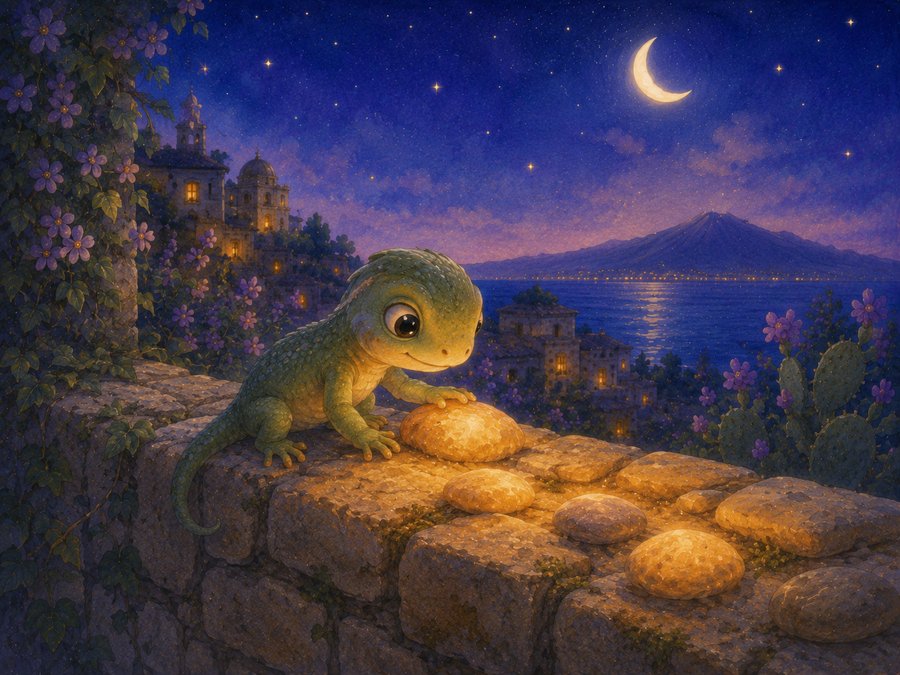
Behind the country house there was a path of pale stones.
By day the sun warmed them. In the evening, when the air grew cool, the stones stayed warm for a while. Leo walked barefoot and said:
“It feels as if the day does not want to go away.”
Grandfather sat on the low wall.
“It is not the day. It is the memory of the sun.”
Leo touched a stone with his hand. It was warm, but it did not burn.
“Do stones remember too?”
“In their own way.”
That evening Leo was sad because his cousin had left. They had played together for a whole week, and now the courtyard seemed empty.
He walked along the path. Every warm stone returned an image to him: a run, a laugh, a peach eaten sitting down, a made-up ant race.
He felt like crying.
“If I remember, I miss her more.”
The wall spoke softly: “At first, yes. Then the memory becomes a place to sit.”
Leo sat on a wide stone. The warmth passed into his legs. It did not bring his cousin back, but it made the emptiness less cold.
The next day he picked up a small stone that had fallen from the edge of the path and placed it on his desk. Not to keep the week still, but to say goodbye to it well.
When he missed someone, he held it in his hand.
Sometimes it was cold. Then Leo closed his eyes and let the warmth return from within.
He understood that memory is like that: it does not stop things from going away, but it keeps a small light for the evening.