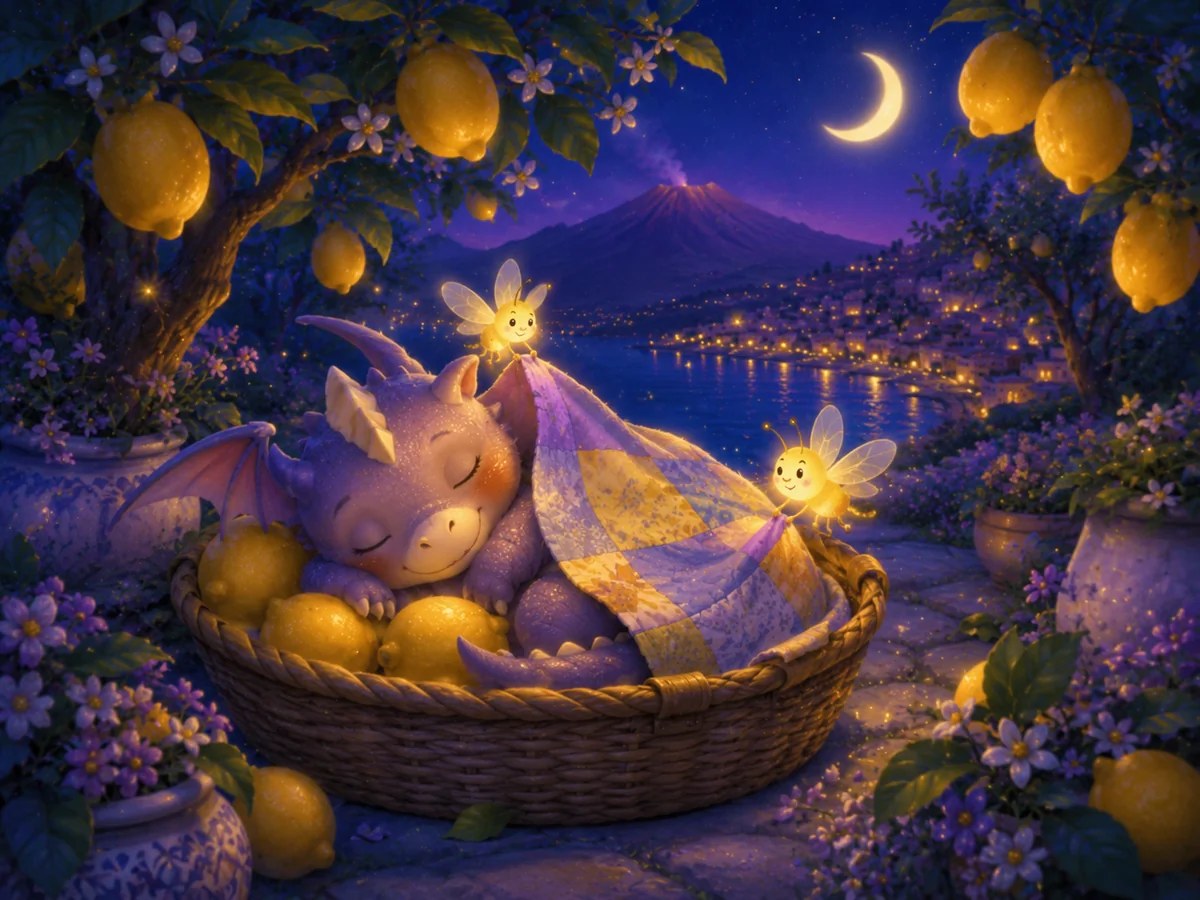
Tito was a young green dragon living in a lemon grove where the fruit looked like yellow moons.
At that hour the day did not end all at once. It folded itself slowly: a blue shadow on the wall, a quieter sound of the sea, the warm smell of stone, leaves and dinner drifting from nearby houses.
Whenever he felt happy, surprised or embarrassed, little flames flew from his mouth and frightened leaves, moths and friends.
The night answered without making a fuss. A worm with a leaf hat gave him three stones: breathe in, hold the warmth, blow as if warming milk. Nobody announced it; it simply appeared, as the best bedtime magic often does, close enough to touch and gentle enough not to frighten anyone.
Tito practised night after night, failing at first and then making a smaller, rounder flame.
So the story began to move in small steps. There was no race, no loud lesson, no grown-up speech that explained everything. When the wind blew out the lantern near the well, a child was left in the dark among the lemon trees.
Then came the moment when the little difficulty changed shape. Tito felt the fire rush up, but he remembered the stones and lit the lantern with one thin golden breath.
The moon stayed above the roofs and the place became quiet again. What had seemed confusing or too big was now made of smaller pieces: one breath, one look, one careful gesture, one more try.
From then on, his fire did not disappear. It became gentler, and the lemons shone around him like small quiet moons.
When sleep finally arrived, it came softly. The child listening to the story could almost hear the same thing the characters had learned: go slowly, notice what is near, and let the night become a friend.
Reading ritual: Read slowly. Leave a soft pause between scenes, so the child can picture the place before naming the feeling.